'%3E%3Cpath d='M0 0H360V240H0V0Z' fill='%23A1A8C2' fill-opacity='0.18'/%3E%3Cpath d='M260 59C260 78.33 244.33 94 225 94C205.67 94 190 78.33 190 59C190 39.67 205.67 24 225 24C244.33 24 260 39.67 260 59Z' fill='%23A1A8C2' fill-opacity='0.25'/%3E%3Cpath fill-rule='evenodd' clip-rule='evenodd' d='M319 250H417L291.485 124.485C286.799 119.799 279.201 119.799 274.515 124.485L234 165L319 250Z' fill='%23A1A8C2' fill-opacity='0.25'/%3E%3Cpath d='M311 250L-89 250L102.515 58.4853C107.201 53.799 114.799 53.799 119.485 58.4853L311 250Z' fill='%23A1A8C2' fill-opacity='0.25'/%3E%3C/g%3E%3Cdefs%3E%3CclipPath id='clip0'%3E%3Cpath d='M0 0H360V240H0V0Z' fill='white'/%3E%3C/clipPath%3E%3C/defs%3E%3C/svg%3E%0A)

Earn Loyalty points. Learn More
.png&w=3840&q=75)





Chemical acids like AHAs, BHAs, and PHAs are what help to dissolve the 'glue' that is trapping dead and dull skin cells on the surface, speeding up the cell renewal process to reveal a smooth and radiant complexion.
They sit within the same skincare, active ingredient, must-have exfoliant category.
Only, they work on the skin in very different ways.
.png&w=3840&q=75)
.jpeg&w=3840&q=75)

Note: Molecule size determines absorption speed — larger molecules sink in more slowly, making PHAs the most gentle of the three. BHAs are uniquely oil-soluble, allowing them to penetrate beneath the skin surface and clear congested pores.
What are AHAs?
Alpha-Hydroxy Acids.
Naturally occurring in sugarcane (glycolic acid), milk (lactic acid) and fruit (citric acid).
These exfoliants are categorized as mild on the skin, best known for smoothing, softening, and reducing the appearance of fine lines, wrinkles, and pigmentation, with consistent use.
What are BHAs?
Beta-Hydroxy Acids
Naturally occurring in the bark of white willow plants and wintergreen leaves (salicylic acid).
These exfoliants, though salicylic acid is almost always the one BHA in question, are categorized as mild on the skin when used sparingly and in small concentration. They can refine rough or textured skin and remove bacteria sitting in the skin's pores.
What are PHAs?
Poly-Hydroxy Acids
Naturally occurring in honey, fruit, and fermented products like wine or kombucha (gluconolactone).
These exfoliants are categorized as exceptionally gentle on the skin, though often overshadowed by their more popular counterparts, in AHAs and BHAs. These should be your go-to for evening tone, maintaining skin hydration, and reinforcing skin barrier strength.
The difference between AHAs, BHAs, and PHAs:
Let's go deeper. Our specialty, talking about ingredients at the molecular level.
AHAs and PHAs are water soluble acids, which means they work on the skin's surface only. BHAs are oil-soluble, giving them the ability to get to work on and under the skin's surface, cleaning out clogged pores.
AHAs are the smallest molecule in size and weight, followed by BHAs, and then PHAs. This order dictates how quickly and effectively each ingredient is able to sink into the skin and release its active component. Hence why PHAs are considered the most gentle exfoliating option of the three.
.jpeg&w=3840&q=75)
Which exfoliant should I use?
This will very much depend on your skin type, skin concerns, and skin goals, though it is possible to take advantage of a combination of exfoliating acids, with the right formula and product.
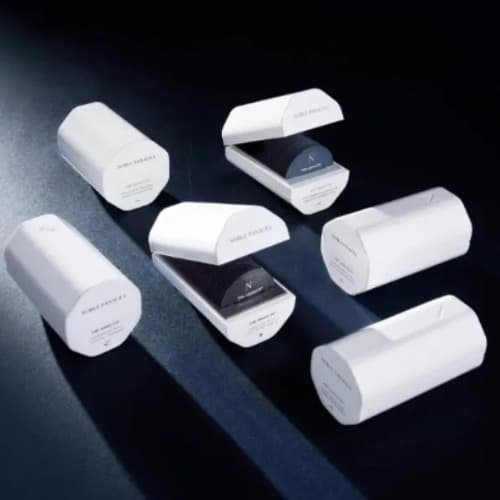
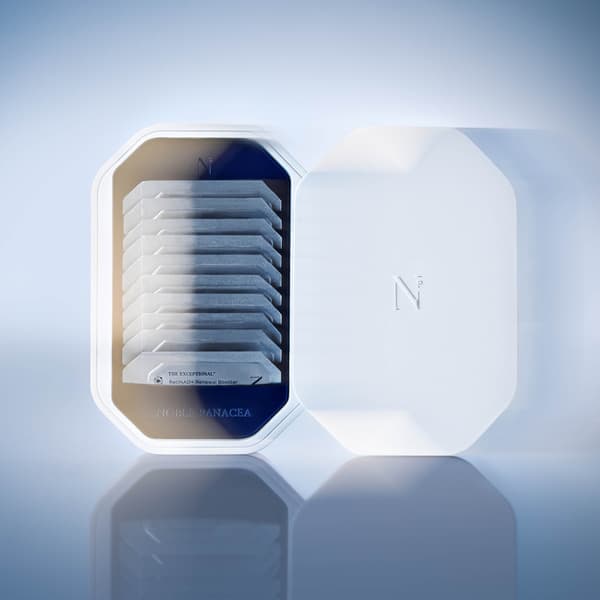
Our Exfoliating Refiner incorporates both AHAs and PHAs, with OSMV™ Technology, for powerful yet gentle exfoliation. No other product can release a micro-dose of chemical exfoliants into the skin over an extended period of time. Product potency is high, risk of irritation is very low. This is how you ensure deep skin renewal that results in a more uniform and radiant glow.
When using active ingredients, always ensure you complete your morning skincare routine with SPF. AHAs and BHAs in particular, make your shiny new skin more susceptible to sunburn and sun damage.

.webp&w=640&q=75)
.webp&w=640&q=75)
.jpeg&w=640&q=75)