Welcome offer

© 2026 Noble Panacea All Rights Reserved.

Join our newsletter for 10% off your first order. Subscribe

Store & Treatments|
HomeHome
  • Sign in
  • Register
0

Join our newsletter for 10% off your first order. By subscribing, you agree to our Privacy Policy, Terms and Conditions and to receive updates via newsletter.

FOLLOW US

Leaping Bunny Approved.

LEARN MORE

English - United States | English - United Kingdom | English - Europe | English - International | French - France | German - Germany | Chinese - China
  • SKINCARE
  • COLLECTIONS
  • BRAND
  • SCIENCE
  • DISCOVER
  • GIFTS
FEATURED
  • New
  • Bestsellers
  • Online Exclusives
  • Auto-Replenish
  • Shop All Skincare
  • Summer Essentials
BY CATEGORY
  • Overnight Mask
  • Treatments
  • Serums
  • Oils
  • SPF
  • Day Moisturizers
  • Night Moisturizers
  • Eye Care
  • Skin Preparation
  • Refills
  • Mini Skincare
KEY CONCERNS
  • Anti-Aging
  • Pigmentation & Dark Spots
  • Dehydrated Skin
  • Fine Lines & Wrinkles
  • Dullness
  • Dark Circles
  • Sensitivity
KEY INGREDIENTS
  • Retinol
  • Hyaluronic Acid
  • Niacinamide
  • Peptides
  • Ceramides
  • PHA
  • Vitamin C
  • Coenzyme Q10
Multi-Defense SPF50MULTI-DEFENSE CREAM SPF50
  • The first photoaging protector & corrector activated by UV light.
  • Shop Now
THE EXCEPTIONALTHE EXCEPTIONAL
  • For targeted transformation
  • Discover More
THE ABSOLUTETHE ABSOLUTE
  • For regenerated, repaired skin
  • Discover More
THE BRILLIANTTHE BRILLIANT
  • For glowing radiance
  • Discover More
THE ELEMENTALTHE ELEMENTAL
  • For purified, resurfaced skin
  • Discover More
THE ENERGISTTHE ENERGIST
  • For photoaging and UV protection
  • Discover More
OUR STORYOUR STORY
  • Discover More
OUR PHILOSOPHYOUR PHILOSOPHY
  • Discover More
OUR SUSTAINABILITYOUR SUSTAINABILITY
  • Discover More
OUR PHILANTHROPYOUR PHILANTHROPY
  • Discover More
OUR TECHNOLOGYOUR TECHNOLOGY
  • Discover More
OUR LABORATORYOUR LABORATORY
  • Discover More
OUR GREEN CHEMISTRYOUR GREEN CHEMISTRY
  • Discover More
OUR ACTIVE INGREDIENTSOUR ACTIVE INGREDIENTS
  • Discover More
THE NOBLE PROGRAMTHE NOBLE PROGRAM
  • Discover More
OUR EXPERTISEOUR EXPERTISE
  • Discover More
OUR PODCASTOUR PODCAST
  • Discover More
PRESSPRESS
  • Discover More
EXCLUSIVE ONLINE SETSONLINE EXCLUSIVE SETS
  • Discover More
ALL GIFTINGSETS BY COLLECTIONS
  • Discover More
GIFTS UNDER $400GIFTS UNDER $350
  • Discover More
BEST-SELLERSBEST-SELLERS
  • Discover More

Sign In To Get Rewards

HELP & SUPPORT


FAQ


Our Guarantee


Offers


Contact Us


Order details


Shipping Information


Return Policy


Stores & Treatments

BRAND


Our Story


Our Technology


Our Sustainability


Our Podcast


The Noble Program


THE COLLECTIONS


The Energist


The Absolute


The Brilliant


The Exceptional


The Elemental


LEGAL


Terms & conditions


Privacy Policy


Accessibility


Cookie Settings


Zombie Cells And How They Impact Skin Longevity


The hidden story of cellular aging in your skin.


We’re used to thinking of skin aging in surface terms: fine lines and wrinkles, sagging, dullness, uneven texture and tone. But the real story unfolds beneath the visible layer of the skin with the accumulation of cellular damage and dysfunction. One of the most intriguing discoveries reshaping the way we understand skin longevity involves senescent cells, often referred to as zombie cells. These cells sit in a kind of biological limbo and as they linger, they change everything. Setting off a domino effect of dysfunction.

Cellular saboteurs: what are zombie cells?


The result of molecular signals gone awry and the body’s inability to clear out what no longer serves it, senescent cells are metabolically active but no longer divide and multiply as healthy cells do. Instead, they enter a permanent state of cell-cycle arrest in which they secrete a pro-inflammatory cocktail of cytokines, proteases, and growth factors which are collectively known as the senescence-associated secretory phenotype (SASP).


This persistent biochemical chatter is caused by chronic inflammation in the body and contributes to a slow, prolonged form of cellular chaos that degrades collagen and elastin, disrupts cell-to-cell communication, impairs pigmentation control, and weakens the skin’s barrier function. These effects not only erode the structural proteins that scaffold the skin—keeping it firm, even-toned, and resilient—but also have a contagious quality, triggering nearby healthy cells to enter premature senescence.


What we see on the surface is a direct reflection of these deeper imbalances: skin that heals more slowly, reacts more easily, and loses elasticity.

Why zombie cells accumulate in skin?


Cellular senescence is a good thing, initially. It serves a purpose as a self-protective mechanism that occurs when a cell becomes damaged by environmental aggressors like UV radiation, air pollution, oxidative stress, or DNA mutations and halts proliferation. The body doesn’t want these cells to multiply. But with age, the immune system becomes less efficient at removing these dysfunctional cells naturally, and prolonged cellular senescence becomes maladaptive.


Skin is uniquely susceptible to senescence. With its constant turnover, exposure to the elements, and reliance on tightly coordinated cellular functions, it offers fertile ground for zombie cells to take hold. Over time, this leads to telomere shortening, DNA breaks, and disrupted repair pathways that push cells into senescence.


This immunosenescence allows zombie cells to stay on in the skin’s tissues, silently undermining its ability to regenerate and protect itself. Keratinocytes, fibroblasts, melanocytes (even immune cells themselves) can all become senescent, compounding the visible and biological signs of aging.


Chronic stress, too, plays a subtle but significant role. Cortisol, the body’s primary stress hormone, is not inherently harmful as it helps regulate inflammation and supports recovery. But when stress becomes persistent, elevated cortisol begins to interfere with the skin’s repair and makes it harder for the body to eliminate zombie cells and easier for them to accumulate.

Inflammaging: Aging through inflammation.


Zombie cells are not inert. Through SASP, they actively seed inflammation throughout the skin’s microenvironment. This chronic, low-grade inflammation—coined inflammaging by Italian scientist Dr. Claudio Franceschi—is a hallmark of biological aging. In the skin, inflammaging manifests as collagen breakdown, barrier dysfunction, pigment irregularities, and increased sensitivity. It’s not simply that the skin becomes older but that it becomes slower to heal, more prone to flare-ups, and less able to bounce back from daily stress.


What makes inflammaging particularly insidious is that it’s both a cause and consequence of senescence. The inflammatory signals released by zombie cells promote further damage, which in turn accelerates the formation of more senescent cells. It’s a loop of dysfunction that intensifies over time.

Restoring cellular rhythm.


While topicals matter, the skin’s capacity to manage senescence is deeply influenced by internal systems. Practices that support autophagy—the body’s natural cleanup process—can help remove damaged cellular components and reduce the burden of dysfunctional cells.


Adequate sleep, particularly in its deep stages, is crucial for cellular repair. An antioxidant-rich diet, balanced blood sugar, and movement that boosts circulation all help reduce the oxidative stress that drives senescence. Intermittent fasting and cold exposure are also being studied for their ability to stimulate autophagy and cellular renewal, although more research is needed to fully understand their impact on the skin.


While these lifestyle strategies won’t eliminate zombie cells on their own, they work synergistically with skincare to improve skin resilience, clarity, and long-term health.

The future of longevity skincare.


The emerging science of senescence is more than just the latest buzz in beauty. It’s a reframing of how we think about aging; less about erasing lines, more about sustaining function. Zombie cells challenge the assumption that aging skin is simply about loss. In truth, it’s often just as much about accumulation: of damage, of stress, of inflammatory byproducts that the skin no longer clears efficiently.


By learning to target, neutralize, and prevent the buildup of these dysfunctional cells, skincare becomes more than surface deep. It becomes a form of cellular maintenance and a way to align beauty with biology.


The most exciting future in skincare isn’t about chasing youth. It’s about creating environments where the skin can function optimally, at any age. This means embracing both innovation and restoration: products that communicate with cells, routines that respect skin cycles, and a lifestyle that supports repair from the inside out.


Radiance, then, becomes not just something you see but rather something your skin does. A reflection not of age, but of efficiency, harmony, and vitality at the deepest level.

Can skincare target zombie cells?


The shift in skincare from surface-level correction to cellular optimization reflects a broader movement in beauty: from anti-aging to pro-function. Instead of chasing immediate aesthetic results, we’re learning to support the skin’s deeper rhythms and its capacity for renewal, resilience, and balance. This is cell-aware skincare.


At the center of this is a growing field known as senotherapeutics; treatments aimed at managing senescent cells. While much of the work is still at the experimental or pharmaceutical stage, certain ingredients in topical skincare are leading the way in tackling skin senescence.


One of the key ingredients in fighting zombie cells in skincare is peptides. These can help fortify the surrounding tissue protecting healthy cells from inflammatory damage and supporting the integrity of the skin’s matrix.


Quercetin: A flavonoid found in plants, shown to have senolytic effects in laboratory settings. It helps reduce oxidative stress and supports the clearance of senescent cells.


Niacinamide: While not directly senolytic, it supports cellular energy production and DNA repair, potentially slowing the onset of senescence.


Retinoids: These remain the gold standard in promoting healthy cell turnover and may help reduce the burden of zombie cells by encouraging new cell formation.


Polyenzyme antioxidants like superoxide dismutase (SOD) and catalase mimic natural cellular defenses and may reduce the oxidative damage that drives cells into senescence. At the same time, supporting the skin’s own repair processes — through ingredients like ceramides and centella asiatica — helps buffer the surrounding tissue from the inflammatory effects of SASP.


One of the key ingredients in fighting zombie cells in skincare is peptides. These can help fortify the surrounding tissue protecting healthy cells from inflammatory damage and supporting the integrity of the skin’s matrix.


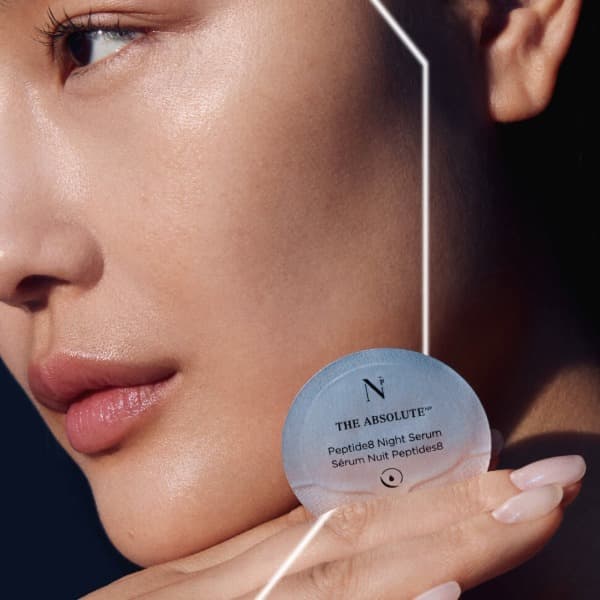
THE ABSOLUTE

NEW PEPTIDE8 NIGHT SERUM


DISCOVER MORE